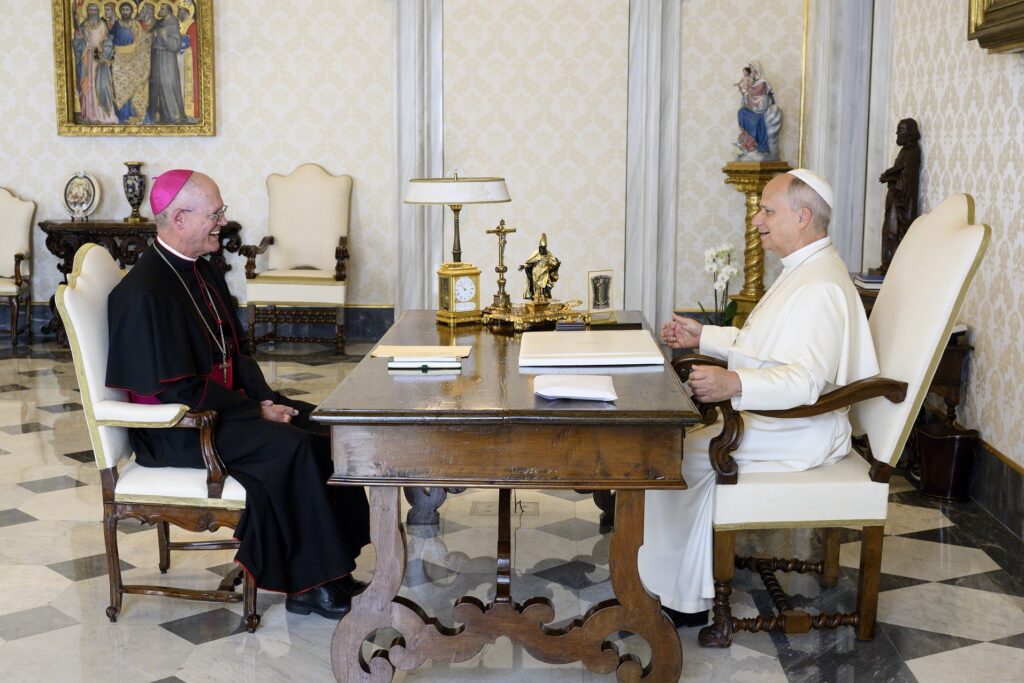
I landed in Rome Wednesday, September 30. Visits to various Curia offices began the following morning and what a start it was! I was granted a private audience with Pope Leo XIV.
In my 17 years as a bishop, this was the first time I have had such a privilege. In fact, it was exactly 17 years ago today I received ‘the call’ from Archbishop Pietro Sambi, Apostolic Nuncio to the United States telling me that Pope Benedict XVI had named me Bishop of Cheyenne.
As you know, our Holy Father released his first encyclical, Magnifica Humanitas in May. The subtitle of the encyclical reads: On Safeguarding the Human Person in the Time of Artificial Intelligence, and this was the purpose of our discussion.
As the Archbishop of Seattle, where there is a significant presence of tech firms working on artificial intelligence, I had a suspicion after reading the encyclical back in May that this could add another layer of responsibility to my episcopal ministry. That has proven to be the case.
Since this spring, I have met twice with Brad Smith and Carol Ann Browne at Microsoft. Later I was asked to be a part of a small delegation of Cardinals (Cupich of Chicago, McElroy of Washington D.C., and Tobin of Newark) and Arch/Bishops (Cordileone of San Francisco and Cantu of San Jose) who visited three Frontier AI labs in August; Anthropic, META and Google. Shortly after that visit the US Catholic Bishops Conference (USCCB) established a task force for Artificial Intelligence, and I am now a member of that working group. I am sure there will be more to report on this front in the days ahead.
My primary purpose for this visit to Rome is related to my work as the sole bishop member on the board of Catholic Health Association. Every other year the Executive Board makes a visit to some of the Dicasteries of the Vatican Curia to give a briefing on the work of the Association as well as to ‘tend to relationships’ within the Holy See. In order to maximize the use of the cross-Atlantic trip, in addition to my visit with the Holy Father, I also visited a few Dicasteries to do some work on behalf of the Archdiocese of Seattle. ‘Dicastery’ is simply a word to denote a ‘department’ within the structure of the Church. Here is a brief ‘history’ and breakdown of how this developed.
As we all know, Jesus called the Twelve Apostles and entrusted ‘the keys’ of the Kingdom to Peter. What is less known is how Peter made his way to Rome, which was the largest city and earthly kingdom at the time. All of those who followed St. Peter after his martyrdom were acknowledged as his successors and the visible sign of unity and authority in the Church. Thus, Rome came to be the ‘seat’ of Peter and thus the so-called ‘headquarters’ of the Roman Catholic Church, i.e., the Curia.
As the Church grew, it was impossible for one man to provide for all the demands and requests needing direction and decisions. More than likely the first ‘helpers’ of the Successor of Peter were those who drafted and sent letters on his behalf and the structure grew from there. We know an official ‘court’ existed under Pope Urban II (1098). Then a more structured form of the ‘curia’ took place under Popes Sixtus IV and Pius V (1566-1590).
The present-day structure continues to serve the needs of the Holy Father, Pope Leo XIV through a reporting structure that falls under the Secretary of State. One section handles Foreign Affairs and the other directs the Curia. The Curia (more or less) is comprised of two categories, one dealing with specific areas of Church life (Evangelization, Doctrine, Sacraments, etc.) and the other handles concerns of people, such as Bishops, Clergy, Religious, and Laity.
(That may be the most concise history of the Roman Curia and its structure ever written!) In all fairness, much credit goes to Archbishop Augustine (Gus) DiNoia for his brief presentation on this subject to our Executive Committee this morning.
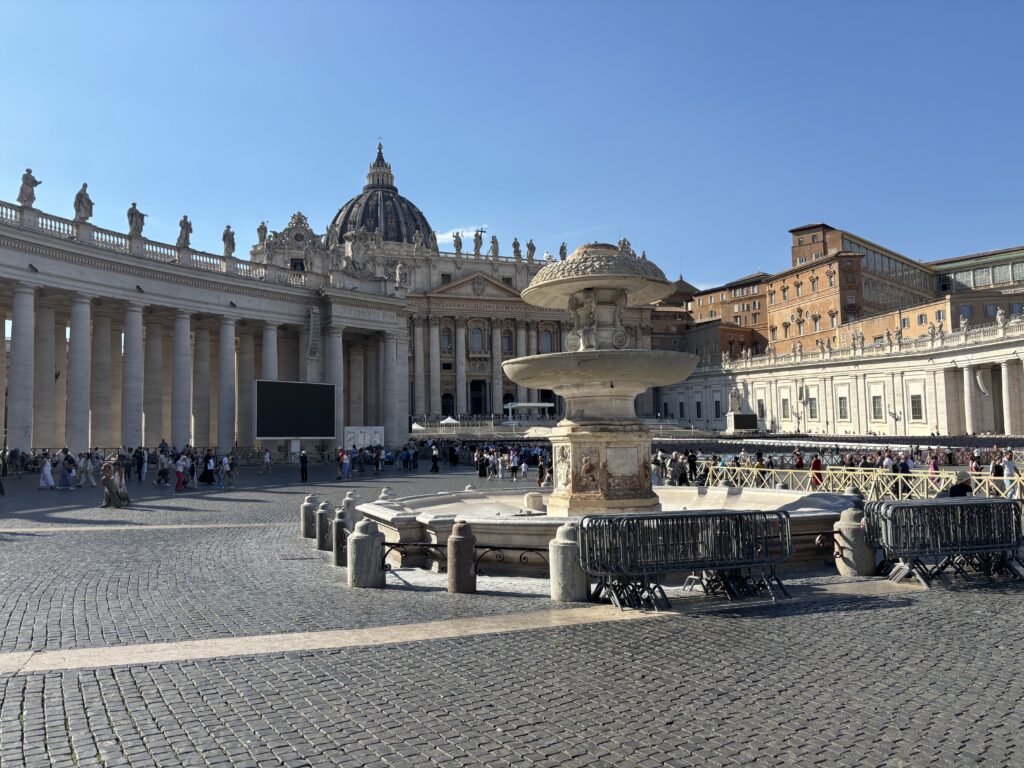
It is now Monday evening in Rome, and I still have a few more days of meetings and appointments. I will return stateside on Friday.
Please know of my prayers for all of you during my time in the Eternal City and if you would, please kindly remember me in your prayers!
In Christ,
Archbishop Etienne
0 Comments